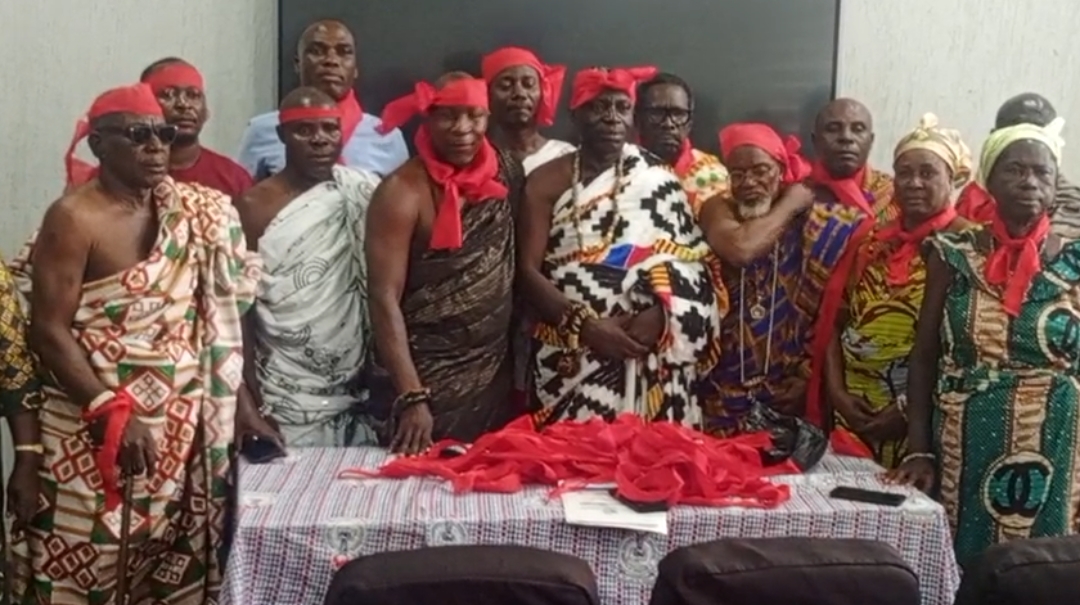
The Canoe and Fishing Gear Owners Association of Ghana (CaFGOAG), together with representatives of fishing communities across the country, has called on President John Dramani Mahama and the government to revoke the offshore gold exploration licences granted to Gold Coast GRC Ghana Ltd., warning that the activities could threaten marine ecosystems, fishing livelihoods and Ghana’s food security.
The association said the government’s decision to suspend the company’s offshore gold exploration activities was a welcome first step but insisted that a suspension alone would not provide lasting protection for fishing communities.
Kenneth Arthur, General Secretary of CaFGOAG, expressed concern at a press conference in Accra over reports that 10 offshore reconnaissance licences covering approximately 10,000 square kilometres of Ghana’s marine waters had been granted.

Kenneth Arthur, General Secretary, CaFGOAG,
He argued that artisanal fishing communities, including chief fishermen, canoe owners, fishing crews, fish processors and traders, had not been adequately consulted before the activities were initiated.
The association is therefore demanding a definitive government decision to revoke the licences and abandon plans for offshore gold exploration and exploitation in Ghana’s coastal waters.
“We therefore call on His Excellency the President and the Government of Ghana to go beyond suspending these activities and take the necessary steps to revoke the licences and abandon plans for offshore gold exploration and exploitation in Ghana’s coastal waters,” he reiterated.
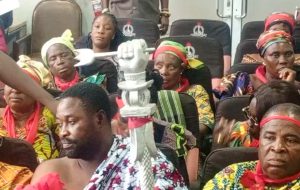
Nana Kwamena Sankah II, President of the National Chief Fishermen and Queen Fishmongers Council, also called for stronger protection of coastal and inland fishing communities against activities that could undermine their livelihoods.
He warned that offshore gold exploration and any subsequent exploitation could have consequences for marine habitats, fish populations and the communities that depend on the sea for their survival.
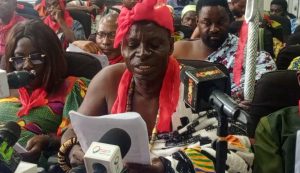
Nana Kwamena Sankah II, President, National Chief Fishermen and Queen Fishmongers Council
Describing the ocean as a vital source of food, employment and cultural heritage, Nana Kwamena Sankah II said Ghana’s marine environment should not be treated merely as a resource for extraction without adequate consideration of its ecological and socioeconomic importance.
“Our ocean is not a liquid desert waiting to be exploited,” he declared.
According to him, generations of fishing families have relied on the sea for their livelihoods, making the protection of fishing grounds essential to the survival of coastal communities.
He cautioned that activities capable of damaging marine habitats, disrupting fish populations or restricting access to fishing grounds could undermine the productivity of the ocean and threaten the future of artisanal fisheries.
He maintained that the consequences of environmental damage would extend beyond current fishing communities, potentially affecting future generations who would depend on the same marine resources for food and employment.
He therefore urged the government to ensure that decisions concerning offshore mineral exploration take into account the long-term health of the marine environment and the interests of communities whose livelihoods depend on it.
Nana Kwamena Sankah II also raised concerns about the possible implications of offshore mineral exploration for the Inshore Exclusion Zone (IEZ), which, according to him, was expanded from six to 12 nautical miles under the Fisheries and Aquaculture Act, 2025 (Act 1146).
The zone is intended to protect artisanal fishing grounds and the marine ecosystems that support fish stocks.
According to him, the expansion represents an important step towards strengthening the protection of small-scale fisheries after years of advocacy.
However, he questioned the value of the expanded protection if the same waters could be opened to activities that might damage marine habitats, threaten fish stocks or interfere with traditional fishing grounds.
Nana Kwamena Sankah II called on the government to ensure that the legal protections provided under the law translate into effective safeguards at sea.
He argued that offshore mineral exploration and exploitation should not be permitted to undermine the purpose of the Inshore Exclusion Zone or weaken existing efforts to protect artisanal fisheries.
He urged the government to establish clear safeguards against activities that could compromise the ecological and economic benefits the zone is intended to provide.
The fishing groups further expressed concern about the potential implications of the licensed areas for the Greater Cape Three Points Marine Protected Area.
They said the precise relationship between the offshore reconnaissance licence areas and the marine protected area must be established transparently to determine whether the proposed activities could affect the ecologically important zone.
The association warned that activities threatening the area could undermine ongoing conservation efforts, jeopardise marine biodiversity and affect the long-term sustainability of local fisheries.
It called on the government to ensure that sensitive marine ecosystems receive adequate protection against activities that could compromise their ecological functions.
The groups also urged the relevant authorities to make information about the licensed areas and their potential environmental implications available for public scrutiny.
The association’s statement did not establish that the licensed areas overlap with the protected area. Instead, it called for the relationship between them to be clarified.
The association said the debate over offshore gold exploration should not focus exclusively on investment, job creation and government revenue, arguing that the livelihoods of fishing communities and the country’s food security must also be considered.
It noted that artisanal fisheries support fishing crews, canoe owners, fish processors, traders and other businesses throughout the fisheries value chain.
Women engaged in fish processing and trading, in particular, could face economic difficulties if fish catches declined or access to fishing resources became restricted.
The association warned that any disruption to marine ecosystems could affect the availability and affordability of fish, with consequences extending beyond communities located close to the proposed exploration areas.
It also raised concerns about the potential loss of traditional fishing knowledge and livelihoods passed down through generations.
While acknowledging Ghana’s need for investment and economic development, the groups maintained that such objectives should not be pursued at the expense of the natural resources that sustain millions of people.
They further argued that promised mining jobs, financial compensation or short-term economic benefits could not necessarily replace healthy marine ecosystems or restore environmental resources if they suffered irreversible damage.
“A healthy ocean is a long-term investment in Ghana’s food security, employment, coastal resilience and future prosperity,”they said.
The association therefore urged the government to prioritise the sustainability of fisheries and the protection of marine resources in its decisions on offshore mineral exploration.
The fishing groups also called on the government to align decisions on offshore mineral activities with Ghana’s international commitments on sustainable development and biodiversity conservation.
They specifically cited Sustainable Development Goal 14, which focuses on conserving and sustainably using the oceans, seas and marine resources.
The association also referred to the Kunming–Montreal Global Biodiversity Framework, including Target 3, which seeks to ensure that at least 30 per cent of terrestrial, inland water, coastal and marine areas are effectively conserved and managed by 2030.
According to the groups, these commitments should guide decisions on activities that could place Ghana’s marine ecosystems and fisheries at risk.
They stressed that biodiversity protection, sustainable fishing practices and the rights and livelihoods of coastal communities must form part of the government’s assessment of proposed offshore mineral activities.
The association called on the government to ensure that offshore exploration and any subsequent exploitation do not undermine national fisheries sustainability objectives or Ghana’s broader marine conservation commitments.
Nana Kwamena Sankah II, speaking for the National Chief Fishermen and Queen Fishmongers Council, outlined five key demands directed at President Mahama and the government.
First, the groups want the offshore reconnaissance licences granted to Gold Coast GRC Ghana Ltd. revoked and plans for offshore gold exploration and exploitation in Ghana’s coastal waters abandoned.
Second, they are demanding protection for the Inshore Exclusion Zone against seabed mineral exploration and extraction activities that could undermine its purpose of safeguarding artisanal fisheries and marine ecosystems.
Third, they want sensitive marine ecosystems, including the Greater Cape Three Points Marine Protected Area, protected from activities that could threaten biodiversity, fish stocks and conservation efforts.
Fourth, they are calling for the rights and voices of artisanal fishing communities to be respected through meaningful consultation and participation in decisions affecting their fishing grounds, livelihoods and future.
Finally, the groups want the government to prioritise the long-term sustainability of Ghana’s fisheries and food security to ensure that future generations inherit a healthy and productive marine environment.
The demands reflect the groups’ position that fishing communities should have a meaningful role in decisions concerning the use of marine resources on which their livelihoods depend.
Although the association welcomed the government’s decision to suspend the offshore gold exploration activities, it maintained that the measure did not provide the long-term certainty required by fishing communities.
It argued that only a clear and definitive decision to revoke the licences and abandon the proposed activities would address the concerns raised by artisanal fishers and other stakeholders in the fisheries sector.
The association also called for transparency regarding the licensed areas and the potential environmental implications of offshore gold exploration.
It said the government must ensure that the interests of fishing communities are adequately considered alongside broader economic and investment objectives.
The groups reiterated that protecting Ghana’s marine environment was essential not only for the fishing industry but also for national food security, employment, biodiversity conservation and the welfare of future generations.
“Our ocean is our life. Our fishing grounds are our future. Our children deserve a living ocean, not a liquid desert,” the statement concluded.
The association appeal with a call for the immediate revocation of the licences, the protection of Ghana’s fisheries and the safeguarding of the country’s marine resources for present and future generations.
By 1960news.com