The Minority in Parliament has challenged the government’s proposed $10 billion New Economy agenda, questioning its ability to mobilise the required resources amid what it describes as persistent revenue shortfalls, reduced capital expenditure and delays in implementing key development programmes.
The Minority is demanding that the government account for its existing economic commitments, particularly the 24-hour economy initiative, before introducing another major programme aimed at transforming the country’s economy.
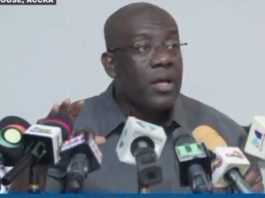
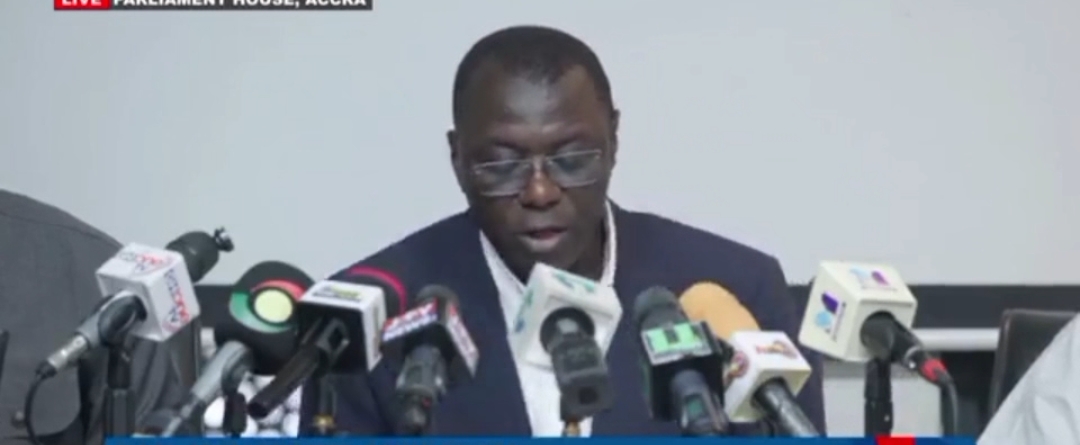
The Ranking Member on Parliament’s Finance Committee and former Finance Minister, Dr Mohammed Amin Adam, raised the concerns at a press conference on Tuesday, November 10, 2026, ahead of the presentation of the 2027 Budget Statement and Economic Policy.
The engagement, held under the theme “Paper Economy vs Pocket Economy: The Ghanaian Expectation of the 2027 Budget,” focused on the government’s economic performance and whether improvements in macroeconomic indicators were translating into better living conditions for Ghanaians.
Finance Minister Dr Cassiel Ato Forson is scheduled to present the 2027 Budget to Parliament on Thursday, November 12.
Although acknowledging the importance of the proposed $10 billion New Economy initiative, Dr Amin Adam argued that the government must demonstrate its capacity to implement existing commitments before asking Ghanaians to embrace another ambitious economic agenda.
He said Ghana needs policies that expand productive capacity, strengthen agriculture and industry, create sustainable employment opportunities and improve the economic prospects of the growing youth population.
However, he cautioned that ambitious policy announcements must be supported by adequate financing, effective implementation and measurable outcomes.
“Ambition, as we know, is not a substitute for execution,” he said, challenging the government to demonstrate what it had achieved under its existing programmes.
A central issue raised by the Minority is the implementation of the 24-hour economy initiative, which was presented as a major pillar of the NDC government’s economic transformation agenda.
Dr Amin Adam said the programme was launched in July 2025 with a projected investment of $4 billion and expectations of creating substantial employment opportunities across several sectors.
He noted that the initiative was expected to be supported by seed capital, infrastructure investments and incentives to encourage businesses to operate multiple shifts.
However, he questioned how much of the projected investment had been mobilised, the number of sustainable jobs created and the extent to which the promised interventions had been implemented.
He also expressed concern over the reported reclassification of the proposed 24-hour markets into district economy markets, with their completion timeline extended to 2028.
Citing an announcement by the Minister for Local Government on October 5, 2026, he said the projects has been reorganised into two implementation phases, raising questions about the government’s ability to meet its original delivery commitments.
The Minority Ranking Member further argued that the proposed New Economy agenda shares significant similarities with the original 24-hour economy initiative, particularly in commercial agriculture, energy, critical minerals, textiles and garments, tourism and pharmaceuticals.
He therefore challenged the government to explain whether the proposed initiative represents a new economic framework or a continuation of existing commitments under a different name.
Dr Amin Adam called for full disclosure of the $4 billion investment target, including the amount mobilised, its sources and the projects that had benefited.
He also demanded an account of the seed capital promised under the initiative and the GH¢110 million allocated to the programme in the 2026 Budget.
Additionally, he called for details of the $5.5 billion joint development agreements associated with the initiative, including those that had reached financial close and those that remained at the memorandum stage.
On the proposed 24-hour markets, he wants the government to disclose the number of projects commenced and completed, payments made to contractors and the reasons for the changes in their scope and completion schedules.
Dr Amin Adam also questioned the implementation of incentives announced to encourage private-sector participation in the 24-hour economy.
He recalled that President John Dramani Mahama had announced a 50 per cent tax rebate for businesses operating three shifts and a 25 per cent rebate for those operating two shifts.
Other proposed incentives included import duty waivers on machinery, time-of-use electricity discounts and extended port clearance services.
According to him, the President has indicated that a comprehensive package would be presented to Parliament for approval, since tax exemptions and waivers require parliamentary authorisation.
The Minority is therefore demanding clarification on whether the incentive package has been submitted to and approved by Parliament.
It also wants the government to disclose the number of businesses certified under the initiative, the companies that have benefited from the proposed incentives and the total revenue forgone through the policy.
Dr Amin Adam further questioned whether the promised time-of-use electricity tariff arrangements had been implemented for businesses operating multiple shifts.
He insisted that the government must publish a list of beneficiary companies and provide verifiable data on the jobs created under the programme.
He recalled that proponents of the 24-hour economy had projected that the initiative could absorb at least 300,000 new entrants into the labour market annually.
He said the Minority expects the government to provide an independently verifiable register of jobs created under the initiative, supported by payroll information and SSNIT contribution records.
Beyond the 24-hour economy, the former Finance Minister identified several government initiatives which he said had experienced implementation delays, inadequate funding or significant gaps between their targets and actual delivery.
He argued that the challenges raise questions about the government’s capacity to implement another large-scale economic programme.
On the Big Push infrastructure programme, he said the government has targeted GH¢30 billion in expenditure on roads and bridges in 2026 but had disbursed only GH¢6.5 billion by mid-year.
He also questioned the government’s projected creation of up to 800,000 jobs through the programme, demanding that the 2027 Budget provide an updated account of employment generated so far.
Regarding the Women’s Development Bank, Dr Amin Adam said GH¢51.3 million was allocated in the 2025 Budget, with a further GH¢401 million provided in 2026.
However, he claimed that the institution has yet to grant a loan to any woman because it was still awaiting a banking licence.
He described the situation as a setback to the government’s commitment to improving access to affordable financing for women-owned businesses.
On the National Coders Programme, he said although GH¢100 million had been allocated in 2026 to train 300,000 young people, only about 40,000 had been enrolled, with approximately 28,000 completing one module.
He called for transparency regarding the programme’s enrolment figures, completion rates and expenditure.
The Minority also raised concerns about the government’s hospital infrastructure commitments.
Dr Amin Adam said GH¢100 million had been allocated in the 2026 Budget towards completing 10 hospitals, but the projects remained unfinished.
He further criticised the implementation of the Feed Ghana and Nkoko Nkitinkiti programmes, arguing that progress in domestic poultry production had been unsatisfactory, while the livestock component had yet to commence.
He said the slow implementation undermined the government’s objective of strengthening local food production and reducing reliance on imports.
On the Adwumawura Youth Enterprise Programme, which was expected to support 10,000 youth-owned businesses annually, Dr Amin Adam said the government allocated GH¢100 million in 2025 and GH¢160 million in 2026.
However, records available to the Minority indicated that only 475 grants had been issued to businesses by March 2026, according to him.
He questioned the disparity between the programme’s annual target and the number of beneficiaries recorded.
The National Apprenticeship Programme was also cited as an example of what he described as the government’s implementation challenges.
He said the programme received GH¢300 million in 2025 and GH¢170 million in 2026, with a target of expanding the number of apprentices to 100,000.
However, he claimed that available records showed that only about 14,000 apprentices had been reached, while approximately 26 per cent of the 2026 allocation had been released by mid-year.
On the Pharmaceutical Service Centres initiative, Dr Amin Adam said GH¢690 million had been allocated in the 2026 Budget to establish centres equipped with approximately 4,400 machines across 50 agricultural districts.
He claimed that construction is underway at only 15 of the proposed 50 centres.
He also questioned the progress of the Accra-Kumasi Expressway, which the government had indicated would commence in 2026 and generate more than 30,000 construction jobs.
According to him, no construction contract has been awarded as of October 2026, with procurement still at the prequalification stage.
He further alleged that funds earmarked for the project remains in an account at the Bank of Ghana.
Other programmes cited included the oil palm development initiative and the Ghana Medical Trust, which he said also required detailed implementation reports in the 2027 Budget.
Dr Amin Adam identified three major questions he believes the Finance Minister must address regarding the proposed $10 billion New Economy agenda.
First, he questioned how the government intends to mobilise $10 billion for the new initiative when it has yet to demonstrate how much of the $4 billion projected for the original 24-hour economy has been secured.
He said the government must provide a credible financing framework and identify the sources of funding for the proposed programme.
Second, he questioned how the government intends to finance the initiative at a time when capital expenditure has reportedly fallen below budgetary targets.
He cited a 39.3 per cent decline in capital spending during the first half of 2026 and a reported GH¢5 billion reduction in the capital expenditure budget.
According to him, the reduction in capital spending, alongside the alleged reallocation of resources to support gold purchases through GoldBod, raises concerns about the government’s capacity to finance major infrastructure and industrial projects.
He argued that the New Economy would require substantial investment in factories, land, irrigation systems, energy infrastructure and other productive assets.
Consequently, he questioned how the government could mobilise additional resources for the $10 billion programme when it was struggling to finance existing capital commitments.
His third concern related to the government’s ability to meet its financial obligations to public sector workers and cocoa farmers while pursuing another ambitious economic programme.
He cited the nationwide teachers’ strike over outstanding promotion-related arrears and allowances, as well as the postponement of deprived-area allowances to January 2027.
He also alleged that cocoa farmers were owed more than GH¢10 billion for beans already delivered to the government, at a time when the producer price had been reduced by nearly 29 per cent.
Dr Amin Adam argued that these outstanding obligations raise questions about the government’s financial priorities and its capacity to sustain additional spending commitments.
The former Finance Minister also expressed concern about the government’s reliance on additional fiscal space under the International Monetary Fund-supported programme to finance its proposed economic agenda.
He referred to the proposed adjustment of the primary balance target on a commitment basis from 1.5 per cent to 0.5 per cent of GDP, arguing that the arrangement should not be mistaken for the creation of additional revenue.
According to him, the adjustment provides room for increased government expenditure but does not automatically generate the financial resources required to implement new programmes.
He maintained that the government must still mobilise the necessary revenue, particularly given what he described as poor revenue performance in 2025 and 2026.
He argued that revenue shortfalls had contributed to the under-execution of several flagship programmes and questioned whether the government could successfully implement the proposed New Economy without addressing the underlying challenges.
He warned that the $10 billion initiative could become another unfulfilled policy promise if it was not supported by clearly identified financing sources and a credible revenue mobilisation strategy.
Beyond the financing concerns, Dr Amin Adam argued that the government’s economic recovery narrative must be assessed against the everyday experiences of ordinary Ghanaians.
He drew a distinction between the paper economy and the pocket economy, referencing concerns recently raised by former Vice-President and NPP flagbearer Dr Mahamudu Bawumia.
He acknowledged that lower inflation, improved foreign reserves and a stronger external position were important indicators of economic stability.
However, he maintained that these indicators alone do not provide a complete picture of economic welfare.
According to him, the real measure of economic progress should be whether farmers are receiving better returns, traders are recording improved sales, young graduates are securing decent jobs and workers can afford essential goods and services.
“For the farmer, it is the cost of inputs and the returns from farming. For the trader, it is the purchasing power of customers. For the young graduate, it is the availability of a decent job. And for the ordinary worker, it is whether earnings can meet the rising cost of essential services,” he said.
He argued that the government must demonstrate how improvements in macroeconomic indicators were translating into higher real incomes, affordable food, lower transportation costs, manageable rent and improved household welfare.
Dr Amin Adam further claimed that traders are struggling to sell their goods because of weak consumer purchasing power, while farmers were experiencing difficulties finding buyers for their produce.
He also criticised public sector salary adjustments, citing increases of 10 per cent in 2025 and 9 per cent for 2027 and 2028, which he considered inadequate compared with the adjustments made in 2024.
He insisted that economic stability must be reflected in the financial circumstances of households rather than measured solely through national economic statistics.
The Minority also questioned the pace of Ghana’s economic growth, arguing that the improvement recorded in 2024 had not been matched by similar gains under the current administration.
Dr Amin Adam said real GDP growth increased from approximately 3 per cent in 2023 to 5.8 per cent in 2024, representing an improvement of about 2.8 percentage points.
However, he said growth rose to approximately 6 per cent in 2025, representing a marginal increase of 0.2 percentage points over the previous year.
He also cited figures showing a decline in real GDP growth from 6.6 per cent in the first quarter of 2025 to 6 per cent in the corresponding period of 2026.
He said the development raised concerns about the sustainability of the economic recovery and the government’s prospects of achieving its 2026 growth target.
He therefore urged the government to use the 2027 Budget to provide a comprehensive assessment of economic performance, including productivity, employment, investment and household welfare.
Dr Amin Adam maintained that the 2027 Budget must provide clear answers on the implementation of existing government programmes, the utilisation of public funds and the financing arrangements for the proposed New Economy agenda.
He reiterated that Ghanaians deserved more than ambitious policy announcements and should be presented with a credible economic plan supported by realistic financing, measurable targets and transparent accountability.
He stressed that the Minority is not opposed to economic transformation but want the government to demonstrate that it has the capacity and financial discipline to deliver its promises.
He consequently urged the government to account for the original 24-hour economy initiative, provide updated implementation figures for its flagship programmes and explain how the proposed $10 billion New Economy would be financed.
“The government must first account for the promises of the old economy before announcing a new one,” he stressed.
The Minority’s concerns are expected to feature prominently in the parliamentary scrutiny of the 2027 Budget, particularly as lawmakers assess the government’s revenue mobilisation strategy, infrastructure commitments, employment targets and broader economic priorities.
By 1960news.com