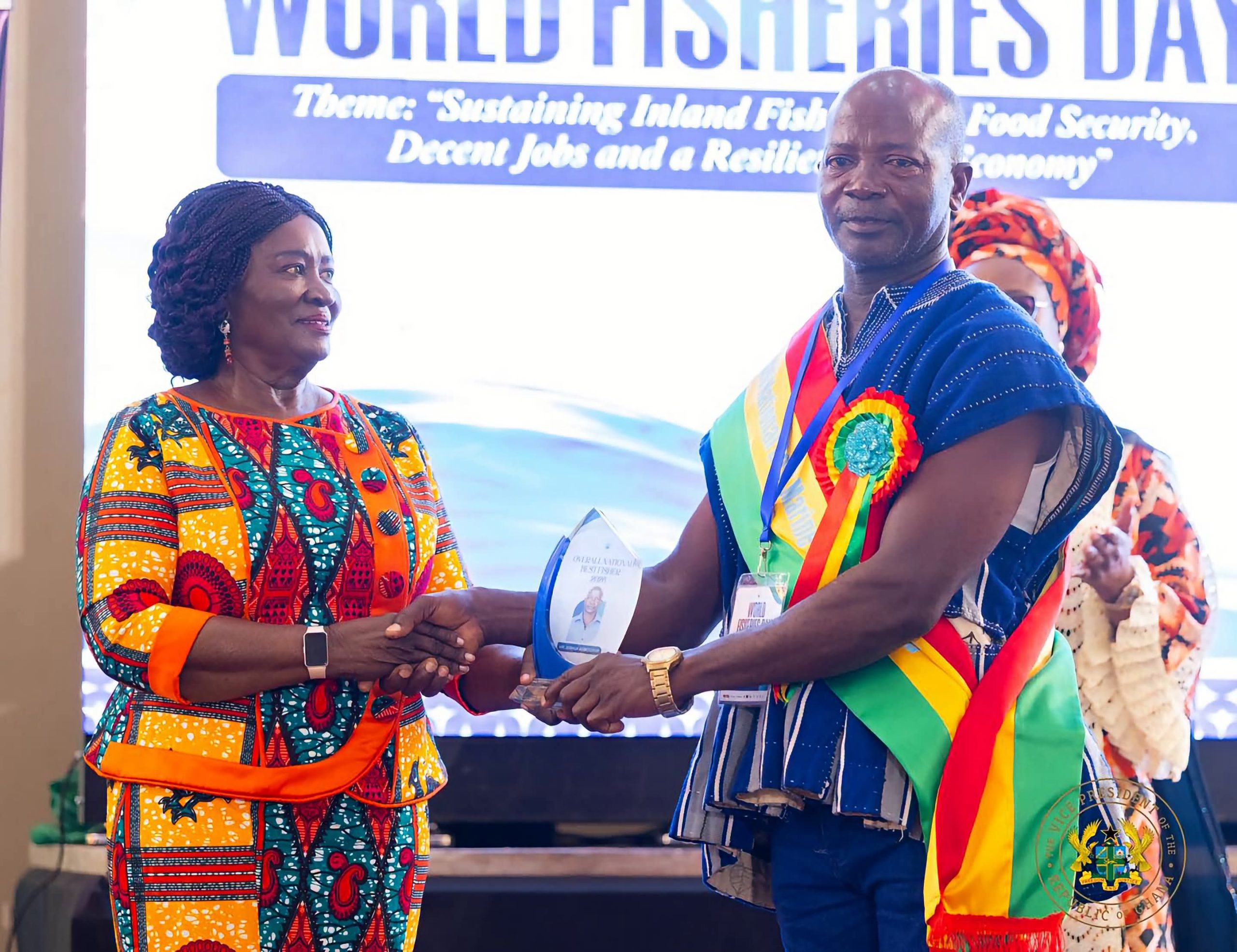
Vice President Professor Jane Naana Opoku-Agyemang has called for intensified regulatory enforcement, greater community involvement and increased investment in fisheries infrastructure to safeguard Ghana’s inland water bodies and the livelihoods of communities that depend on them.
She has warned that pollution from illegal mining, improper waste disposal, climate change and destructive fishing practices continues to threaten the sustainability of the country’s inland fisheries, requiring urgent and coordinated interventions.
The Vice President made the remarks in Sunyani in the Bono Region when she officially opened the 2026 National Inland Fisheries Conference to mark World Fisheries Day.
She observed that inland fisheries had served as a critical source of livelihood for generations, particularly for communities along the Volta Lake and other inland water bodies, where fishing supports economic activities, employment and household incomes.
However, she cautioned that mounting environmental pressures and unsustainable fishing practices could undermine the long-term productivity of these resources if decisive measures were not taken.
Prof. Opoku-Agyemang called for stronger collaboration among government agencies, traditional authorities, fishing communities and other stakeholders to improve compliance with fisheries regulations and strengthen the protection of aquatic ecosystems.
She identified the Fisheries and Aquaculture Act, 2025, and the National Inland Fisheries Management Plan as important frameworks for promoting conservation, responsible fishing practices and the sustainable management of inland fisheries.
She stressed that effective implementation of the two frameworks would be essential to curbing destructive fishing activities, protecting aquatic resources and ensuring their continued availability for future generations.
The Vice President also highlighted the need to modernise Ghana’s fisheries value chain through strategic infrastructure investments, noting that protecting inland water bodies must go hand in hand with improving the economic conditions of fishing communities.
She disclosed that government is pursuing plans to develop Yeji and Buipe into integrated fishing villages, with facilities including modern fish landing sites, cold storage infrastructure, processing centres and organised markets.
The proposed facilities are expected to improve fish handling and preservation, expand processing capacity, create better market access and reduce post-harvest losses.
She further announced plans to establish modern fish markets in Dambai and Accra as part of efforts to improve the marketing and distribution of fish products.
According to her, the infrastructure projects would help strengthen the fisheries value chain while improving the financial security of people engaged in the sector, particularly women.
Women play a significant role in Ghana’s fisheries industry, especially in fish processing, preservation and trading. The Vice President indicated that improved facilities and organised market systems would create better economic opportunities for them and address some of the challenges associated with their activities.
Prof. Opoku-Agyemang further underscored the importance of traditional authorities and local communities in developing policies and interventions to protect inland fisheries resources.
Acknowledging proposals submitted by traditional leaders at the conference, she urged policymakers to remain receptive to local perspectives and recognise the value of indigenous knowledge in addressing challenges affecting fishing communities.
She said traditional authorities possesses valuable experience and an understanding of local conditions that could strengthen government interventions when combined with scientific research.
The Vice President maintained that sustainable fisheries management requires an inclusive approach that bring together scientific evidence, traditional knowledge and the experiences of communities directly dependent on inland water resources.
She encouraged participants to use the conference to develop practical recommendations that could translate into coordinated interventions rather than allowing discussions to end without concrete outcomes.
Prof. Opoku-Agyemang commended the Ministry of Fisheries and Aquaculture, the conference organisers, fishers and other stakeholders for their contributions to the development of Ghana’s fisheries sector.
She urged them to strengthen their collaboration and work towards practical solutions that would protect the country’s aquatic resources while securing the livelihoods of fishing communities.
The 2026 National Inland Fisheries Conference brings together stakeholders to deliberate on the challenges confronting inland fisheries and identify strategies for promoting responsible fishing, environmental conservation and sustainable resource management.
World Fisheries Day, observed annually on November 21, highlights the contribution of fisheries to food security, employment and economic development while drawing attention to the importance of protecting aquatic ecosystems and promoting sustainable fishing practices.
By 1960news.com