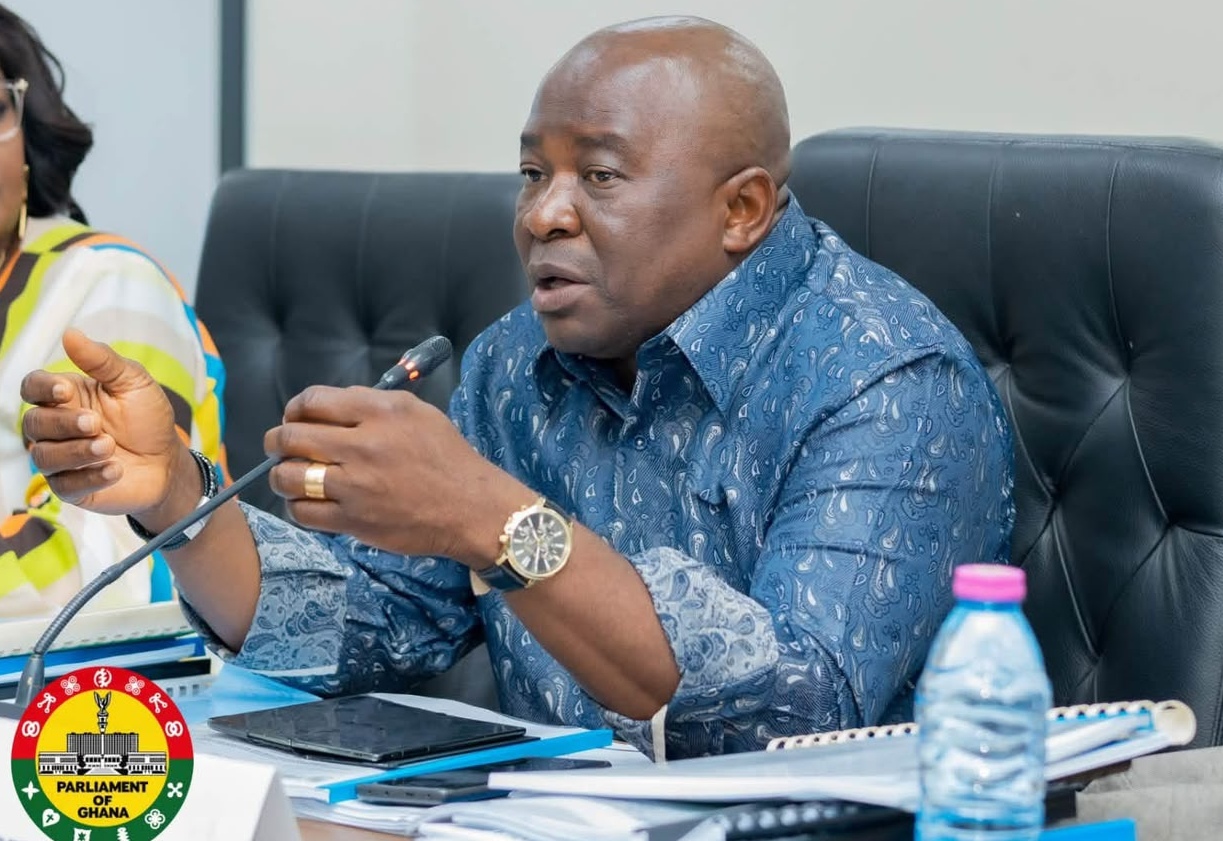
The Member of Parliament for Akyem Oda, Alexander Akwasi Acquah, has questioned the consistency of President John Dramani Mahama’s approach to combating illegal small-scale mining, popularly known as galamsey, following the President’s pledge to keep the Oti Region free from the menace.
Mr Acquah, a former Deputy Minister of Health, suggested that the President’s assurance raises questions about why similar measures could not be effectively implemented in other parts of the country where illegal mining continues to threaten water bodies, forest reserves and farmlands.
His reaction follows President Mahama’s engagement with the Oti Regional House of Chiefs at the Jubilee House in Accra on Friday, November 20, 2026.
During the meeting, the President commended the region for being free from galamsey and assured the traditional authorities of his administration’s commitment to maintaining that status.
“I’m happy that there’s no galamsey in Oti and we intend to keep it like that,” President Mahama said.
In a Facebook post responding to the President’s remarks, Mr Acquah questioned the apparent distinction between the government’s commitment to protecting the Oti Region and the situation in other regions affected by illegal mining.
“I just heard Prez Mahama saying Oti is a very beautiful region and he is happy there is no Galamsay there and that ‘we intend’ to keep it like that,” he wrote.
He went on to suggest that the President’s statement implies that some regions could be shielded from illegal mining while others continues to bear its environmental consequences.
“So there are regions that can wrench under Galamsay and there are others that must be kept clean,” the MP stated.
Expressing further surprise at the declaration, Mr Acquah questioned whether the government’s ability to keep illegal mining out of Oti demonstrates that similar efforts could be pursued in other parts of the country.
“Eiiii so it is possible to keep some regions away from Galamsay! Waoooo,” he added.
He concluded his post with the expression, “Okoto di3, ne bo dwe….. Hmmm.”
The comment by the Akyem Oda MP appears to challenge the government to demonstrate the same level of commitment to preventing illegal mining across the country.
President Mahama’s assurance to the Oti traditional authorities comes amid growing interest in the region following the identification of iron ore and nickel deposits.
Addressing the chiefs, the President disclosed that exploration activities had revealed iron ore deposits with iron content exceeding 50 per cent in several locations.
He also announced the discovery of nickel during the exploration for iron ore, highlighting its industrial importance, particularly in the production of batteries for electric vehicles.
The discoveries, according to the President, present opportunities to attract investment, create employment and stimulate economic development in the region.
However, he stressed that the potential exploitation of the mineral resources would require careful consideration of environmental sustainability and the interests of local communities.
President Mahama assured the traditional authorities that government would engage them and the youth before taking a final decision on mining activities in the area.
He maintained that any mining operation that receives government approval must be undertaken responsibly, ensuring that the region’s natural environment is protected and local communities derive tangible benefits from the exploitation of their resources.
Illegal small-scale mining remains a major environmental challenge in Ghana, with its activities contributing to the degradation of forest reserves, pollution of rivers and other water bodies, and the destruction of agricultural lands.
Efforts to address the menace have involved successive government interventions, enforcement operations and public campaigns, although concerns persist over the effectiveness of measures to curb illegal mining and protect the country’s natural resources.
The issue has also generated sustained public debate, with political actors, organised labour, traditional authorities, civil society organisations and environmental advocates calling for stronger action against perpetrators and those who facilitate illegal mining.
Mr Acquah has previously criticised aspects of the government’s response to galamsey and called on organised labour, religious institutions and other stakeholders to maintain pressure on the authorities to address the problem.
His latest intervention adds to the debate over the consistency of Ghana’s anti-galamsey campaign, particularly whether the political will and enforcement measures being promised for the Oti Region can be extended to other areas facing similar environmental threats.
As government explores the economic potential of Oti’s iron ore and nickel deposits, the President’s pledge also places renewed emphasis on the need to balance mineral development with environmental protection and meaningful consultation with affected communities.
By 1960news.com