
The Ghana Education Service (GES) has officially banned extravagant post-examination celebrations on school premises following growing concerns over the increasing display of wealth during Senior High School completion ceremonies.
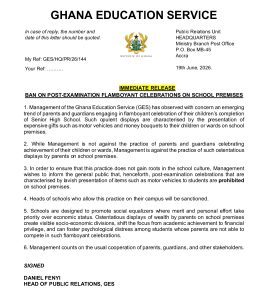
In a statement issued by the Public Relations Unit of the GES Headquarters in Accra on June 19, 2026, the Service expressed concern over what it described as an “emerging trend” where parents and guardians present expensive gifts, including motor vehicles and money bouquets, to students on school compounds after the completion of their final examinations.
According to the statement, while the GES acknowledges and appreciates the desire of parents to celebrate the academic achievements of their children, it strongly opposes the use of school environments for lavish and ostentatious displays.
The statement emphasized that schools are institutions meant to promote equality, discipline, and merit, rather than environments where students are made to feel inferior because of their economic backgrounds.
“Schools are designed to promote social equalizers where merit and personal effort take priority over economic status,” the statement noted.
The GES warned that such flamboyant celebrations have the potential to create unhealthy socio-economic divisions among students, distract from the essence of academic achievement, and expose less privileged students to emotional and psychological distress.
Management therefore announced that, with immediate effect, any post-examination celebration involving the extravagant presentation of items such as cars or other luxurious gifts to students on school premises is strictly prohibited.
The Service further cautioned heads of schools across the country against allowing such activities on their campuses, stressing that sanctions would be imposed on any school authorities who fail to comply with the directive.
“Heads of schools who allow this practice on their campus will be sanctioned,” the statement warned.
The GES believes the growing culture of flashy celebrations risks shifting students’ focus from academic excellence and hard work to materialism and financial privilege.
GES called on parents, guardians, and all education stakeholders to cooperate fully with the directive to preserve the integrity and values of Ghana’s educational institutions.
The move has already sparked conversations among parents, students, and the public, with many applauding the decision as a step toward protecting the dignity and emotional well-being of students from less affluent backgrounds.
By 1960news.com

