
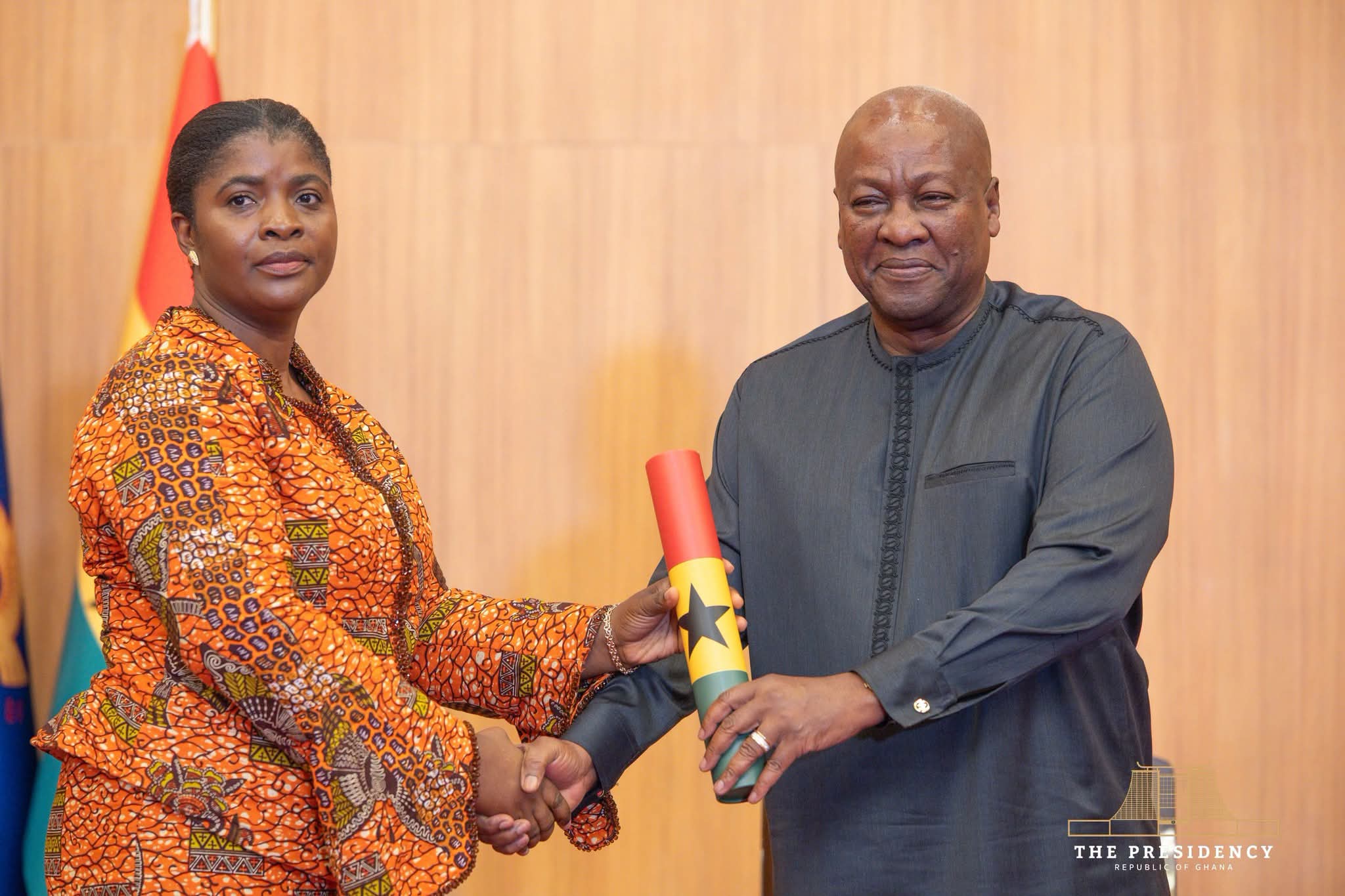
The New Patriotic Party (NPP) has rejected the appointment of Emelia Agbenyo as a Deputy Chairperson of the Electoral Commission (EC), calling on President John Dramani Mahama to withdraw the appointment over concerns about her alleged political affiliation with the governing National Democratic Congress (NDC).
The party argues that Ms Agbenyo’s reported involvement in the NDC’s political activities, including her role as the party’s governance sector spokesperson during the preparation of its 2024 manifesto, raises questions about the impartiality and public credibility of the electoral management body.
In a press statement issued on Tuesday, October 13, 2026, and signed by its National Communications Director, Dennis Miracles Aboagye, the NPP described the appointment as unacceptable, insisting that the Electoral Commission must be led by individuals whose neutrality and independence are beyond suspicion.
The party also called on the Council of State to explain the advice it provided on the appointment and urged the government to use the ongoing constitutional review process to reform the procedure for appointing members of the Commission.
According to the NPP, Ms Agbenyo was actively involved in the NDC’s political communication and campaign activities ahead of the 2024 general elections.
The party said she served as the NDC’s governance sector spokesperson during the preparation of its 2024 manifesto and publicly advocated for the party during its campaign for political power.
It further claimed that videos showed her addressing supporters from NDC campaign rally platforms and wearing the party’s campaign T-shirts while promoting its political agenda.
The NPP argued that her appointment to the senior leadership of the institution responsible for overseeing Ghana’s electoral processes, less than two years after those activities, raises concerns about the Commission’s perceived independence.
“Less than two years on, the President has placed her among the top leadership of the institution that will conduct the 2028 general elections. We find this unacceptable,” the statement said.
The party maintained that the Electoral Commission must command the confidence of all political parties and the general public, particularly as Ghana prepares for the next general elections in 2028.
The NPP also questioned the appointment by referring to comments President Mahama reportedly made in March 2023 concerning the selection of Electoral Commission members.
According to the party, Mr Mahama had criticised the appointment of individuals he described as political party activists to the Commission and called for Article 43(2) of the 1992 Constitution to be amended to require parliamentary approval for such appointments.
The party accused the President of contradicting his earlier position by appointing Ms Agbenyo, whom it considers politically aligned with the NDC, to the Commission’s leadership.
“The President has now done exactly what he condemned,” the NPP stated.
The party’s argument centres on what it considers an inconsistency between the President’s previous position on political neutrality in electoral administration and his decision to appoint Ms Agbenyo.
It is, however, the NPP’s position that the appointment compromises the perception of the Commission’s independence.
The opposition party warned that public confidence in the Electoral Commission is essential to maintaining trust in Ghana’s democratic processes.
It argued that doubts about the neutrality of the Commission’s leadership could affect public perceptions of electoral registration, constituency boundary decisions and the declaration of election results.
“The consequences are serious. Public confidence in the Commission is the foundation on which every election result rests,” the statement said.
It added that once public confidence in the Commission is weakened, its administrative decisions and electoral outcomes could become subjects of suspicion.
The NPP warned that such developments could threaten Ghana’s peace and stability, particularly if political parties and their supporters lose confidence in the institution responsible for conducting elections.
The party insisted that the concerns it had raised could be addressed by reconsidering the appointment and strengthening the procedures governing the selection of Electoral Commission members.
In further criticism, the NPP questioned whether Ms Agbenyo would be able to discharge her responsibilities as Deputy Chairperson without political considerations influencing her decisions.
The party alleged that her association with the NDC could undermine perceptions of her neutrality, transparency and professionalism in office.
It also expressed doubts about her ability to demonstrate the level of impartiality expected of a senior official of the Electoral Commission.
The NPP maintained that individuals appointed to the Commission must prioritise the national interest above the interests of any political party.
However, the party’s concerns about Ms Agbenyo’s political background do not, in themselves, establish that she would act improperly in office.
The question of her ability to perform her duties impartially would ultimately depend on her conduct, adherence to the law and fulfilment of the constitutional responsibilities of the Commission.
The statement also expressed concern about an acceptance speech delivered by a person identified in the release as Mr Asamoah.
The party described his remarks as troubling, arguing that they could undermine the peace and stability Ghana currently enjoys if left unchallenged.
According to the NPP, the speech bear what it considered indications of a partisan agenda and appeared closely aligned with the interests of the NDC.
However, the statement did not provide specific quotations from the speech or elaborate on the particular remarks it considered problematic.
The party’s concerns about the speech therefore remain its assessment of the remarks, with further details needed to establish the specific statements being criticised and the context in which they were made.
Beyond demanding the withdrawal of Ms Agbenyo’s appointment, the NPP called on the Council of State to explain to Ghanaians the advice it gave in connection with the appointment.
The party said the public deserved clarity on the considerations that informed the process, given the importance of the Electoral Commission to Ghana’s democratic governance.
It maintained that transparency in appointments to the Commission would help strengthen public confidence in the institution and address concerns about possible political influence.
The NPP also urged the government to consider reforms to the appointment process as part of the ongoing constitutional review exercise.
It said the process should reflect the proposal President Mahama reportedly advanced in 2023 concerning parliamentary approval for appointments to the Commission.
The party believes changes to the existing framework could help address concerns about the political backgrounds of prospective appointees and strengthen confidence in the Commission’s independence.
The party pledged to pursue all lawful avenues available to it to protect what it described as the integrity of Ghana’s electoral system.
It also appealed to civil society organisations, religious bodies, the media and other stakeholders to support its call for the appointment to be withdrawn.
The NPP said the independence and credibility of the Electoral Commission were matters of national importance that should attract the attention of all Ghanaians, regardless of political affiliation.
The party’s demands come as preparations for the 2028 general elections will eventually place renewed attention on the composition, independence and public credibility of the electoral management body.
At the centre of the controversy is the question of how Ghana can ensure that appointments to the Electoral Commission command broad public confidence while safeguarding the institution’s constitutional independence.
The NPP has made its position clear: it wants President Mahama to withdraw Ms Agbenyo’s appointment, the Council of State to explain its advice and the government to pursue reforms to the appointment process.
By 1960news.com