
A delegation from Ghana’s academic community, led by Professor Robert Darko Osei, has paid a courtesy call on the Speaker of Parliament, Alban Sumana Kingsford Bagbin, and presented a collection of research reports and books aimed at strengthening knowledge sharing, evidence-based policymaking and national development.
The presentation included the State of the Ghanaian Economy Report 2025, published by the Institute of Statistical, Social and Economic Research (ISSER), alongside books authored by Dr Joyce Manyo and Professor Douglas Boateng.
The gesture is intended to deepen intellectual engagement between academia and Parliament while providing legislators with access to relevant research findings and professional publications to inform parliamentary deliberations and policy decisions.
The State of the Ghanaian Economy Report 2025 offers research-based perspectives on Ghana’s economic performance, development trends and challenges. It is expected to serve as a useful reference for Members of Parliament as they scrutinise government policies, assess economic interventions and contribute to discussions on the country’s development priorities.
The additional publications by Dr Manyo and Prof. Boateng are also expected to broaden the range of academic and professional resources available to lawmakers, supporting discussions on issues relevant to governance, institutional development and national progress.
Speaking during the engagement, Speaker Bagbin welcomed the donation and underscored the importance of making academic knowledge and research accessible to Parliament.
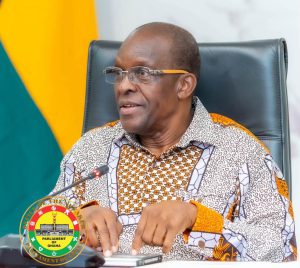
Rt. Hon. Alban Sumana Kingsford Bagbin, Speaker of Parliament, Ghana
He noted that the publications would equip Members of Parliament with relevant knowledge and provide a stronger foundation for informed and meaningful debates on matters of national importance.
According to the Speaker, access to credible research and scholarly publications is essential to strengthening the quality of parliamentary deliberations, particularly as lawmakers perform their legislative, oversight and representative responsibilities.
He further highlighted Parliament’s commitment to promoting an inclusive and open parliamentary system that creates opportunities for citizens to participate more actively in the legislative process.
Mr Bagbin explained that Parliament had taken steps to open up its committee proceedings to the public, allowing citizens to follow discussions and engage with parliamentary processes beyond the traditional confines of the chamber.
He maintained that public participation and transparency remain important pillars of democratic governance, as they help strengthen accountability and bring citizens closer to the institutions responsible for making decisions on their behalf.
Reflecting on the progress made in advancing parliamentary openness, the Speaker said Ghana’s Parliament had, in recent times, received two awards recognising it as the most open Parliament in Africa.
The recognition, he suggested, reflects the institution’s efforts to improve transparency, accessibility and public engagement in the discharge of its constitutional responsibilities.

The engagement highlights the importance of sustained collaboration between Parliament and the academic community in addressing Ghana’s development challenges.
By making research findings and professional publications available to legislators, such partnerships can help bridge the gap between academic knowledge and public policymaking, ensuring that parliamentary debates and decisions are increasingly informed by evidence, expertise and a broader understanding of national issues.
The presentation also reinforces the role of academic institutions and researchers in contributing to national development by supporting public institutions with knowledge and research that can shape policy direction and improve governance.
By 1960news.com

