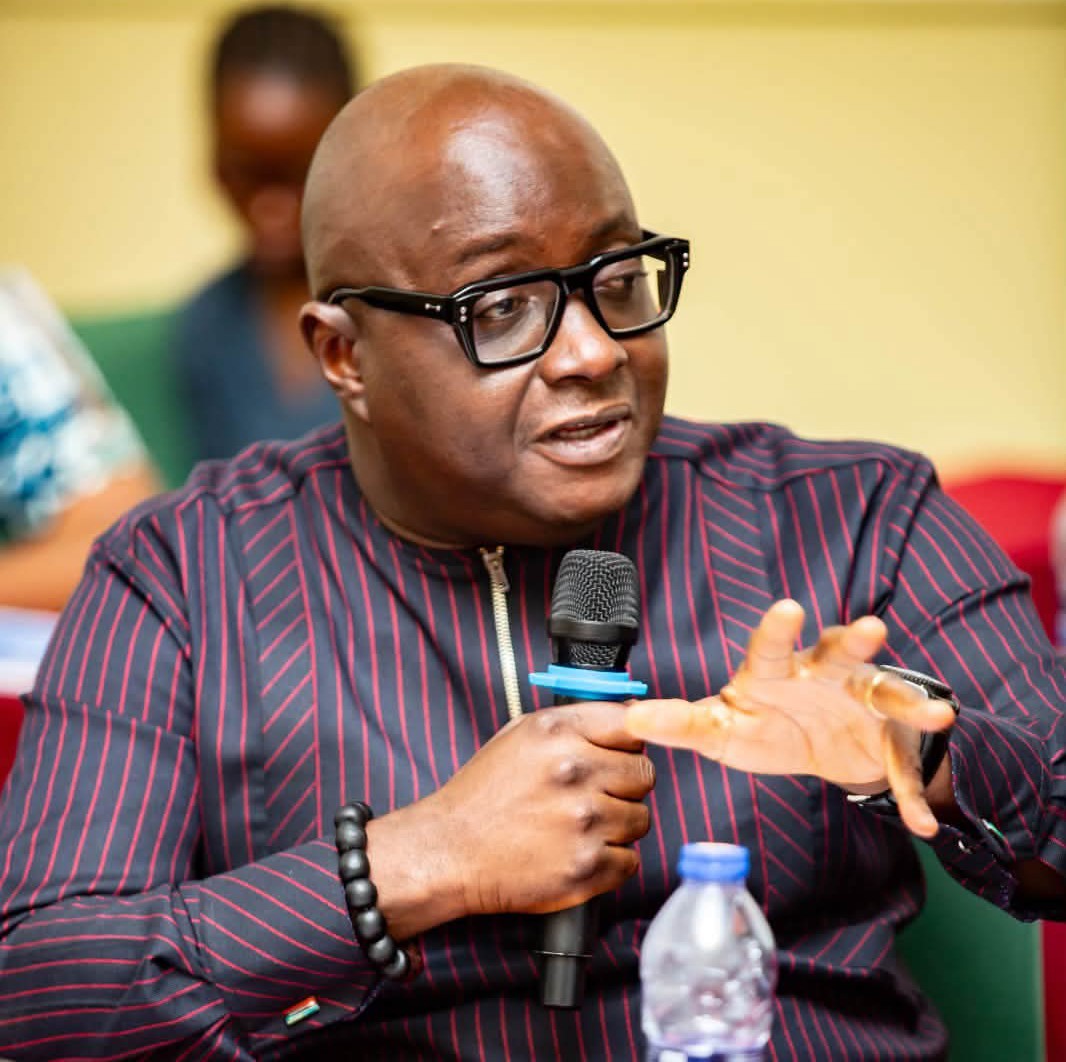
Former Ghana High Commissioner to India, Mike Oquaye Jnr, has called for the establishment of a broad-based consultative assembly to scrutinise proposed changes to the 1992 Constitution before they are implemented.
Mr Oquaye made the call during a stakeholder dialogue on the constitutional reform implementation process organised by the Centre for Democratic Development (CDD-Ghana).
He said the scale of the proposed amendments demands broad national participation, arguing that the reforms should not be left solely to Parliament and political actors.
“Ghana has 299 Articles. Proposed changes and new articles are 208. This means about 69 percent of the 1992 Constitution is about to be altered,” he said.
He proposed that the consultative assembly include Parliament, the Trades Union Congress (TUC), professional associations, civil society organisations and other relevant stakeholders.
“All of Ghana must be involved via the consultative assembly. Parliament, TUC, professional bodies etc etc etc,” Mr Oquaye stated.
He added: “The law is for Ghana and Ghanaians only.”
The call comes as the government considers the recommendations of the Constitution Review Committee (CRC), chaired by Professor Henry Kwasi Prempeh.
The committee submitted its final report to President John Dramani Mahama on December 22, 2025, after conducting nationwide consultations on proposed reforms to Ghana’s constitutional and governance framework.
Among the recommendations is a proposal to extend the terms of the President and Members of Parliament from four to five years while retaining the presidential two-term limit.
The CRC also proposed moving general elections from December to November to create a longer transition period between elections and the assumption of office by an incoming administration.
Other recommendations include reducing the minimum age for presidential candidates from 40 to 30 years and removing the President’s constitutional tax exemption.
The committee proposed ending the appointment of serving Members of Parliament as ministers to strengthen the separation between the Executive and Legislature.
It also recommended a constitutional limit on the number of ministers a government can appoint.
On anti-corruption, the CRC proposed the creation of an Independent Anti-Corruption and Ethics Commission, incorporating the functions of the Office of the Special Prosecutor.
The proposed framework would also remove corruption-related prosecutorial powers from the Attorney General.
In addition, the committee recommended reforms to Article 286 to strengthen the verification of asset declarations by public officials when they assume and leave office.
The CRC proposed a phased transition to the direct election of Metropolitan, Municipal and District Chief Executives (MMDCEs) as part of a broader devolution process.
The report also recommends allowing Ghanaians with dual citizenship to serve as Members of Parliament and abolishing the death penalty.
Mr Oquaye’s call for a consultative assembly is therefore focused on ensuring that the proposed changes receive broad public scrutiny before the implementation process advances.
He believes key institutions and sections of society should have an opportunity to examine the proposals and contribute to decisions that will shape Ghana’s constitutional order.
The proposed reforms cover presidential and parliamentary tenure, elections, the structure of government, anti-corruption institutions, local governance, parliamentary eligibility and fundamental rights, making the implementation process a matter of national significance.
By 1960news.com