
The Tain District Hospital in Nsawkaw has celebrated its 60th anniversary, marking six decades of delivering healthcare services to residents of the Tain District and the Bono Region.
Located on the outskirts of Nsawkaw, the district capital, the facility was originally established on November 13, 1965, by Kwame Nkrumah as a health post under the then Wenchi District.
Over the years, it was upgraded to a health centre and later attained district hospital status in May 2011.
The current 60-bed facility forms part of nine hospital projects initiated under the administration of John Agyekum Kufuor in 2009.
It was officially commissioned on November 6, 2020, with staff moving into the new premises on September 6, 2021.
The hospital currently employs about 400 staff, led by its Medical Superintendent, Dr. Philip Taah-Amoako.
The anniversary celebration brought together several dignitaries, including the National Chairman of the NDC, the Bono Regional Minister, the Regional Health Director, and the Nsawkaw Manhene.
Held under the theme “Prospects for a Secondary Facility: The Role of Stakeholders,” the event focused on advocating for the hospital’s upgrade to a regional facility.
Speaking at the event, Dr. Taah-Amoako urged government and stakeholders to consider elevating the hospital to a regional status, arguing that its infrastructure and strategic location make it a viable candidate.
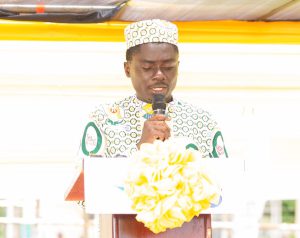 Dr. Philip Taah-Amoako, Medical Superintendent,Tain District Hospital
He drew comparisons with other regions, noting that regional hospitals are not always located in regional capitals.
According to him, just as facilities in Hohoe and Winneba serve as regional hospitals despite their distance from regional capitals, Nsawkaw could equally host the Bono Regional Hospital.
He stressed that modernising the facility to meet regional standards is both necessary and achievable.
Dr. Taah-Amoako also highlighted significant challenges facing the hospital, particularly staff accommodation. He revealed that out of approximately 253 staff members, only 25 have access to on-site accommodation.
As a result, many staff—especially nurses—relocate to larger cities or leave for better opportunities due to high rental costs and poor living conditions.
He disclosed that most staff live at least a 30-minute walk from the hospital, which poses serious challenges during emergencies.
The Medical Superintendent appealed to traditional authorities (Nananom) to support staff by offering land at reduced prices or for free to facilitate housing development.

Another major concern raised was the unstable power supply.
Dr. Taah-Amoako explained that the hospital depends on a radial power line serving both Tain and Banda districts, which frequently experiences faults.
This results in repeated power fluctuations, causing damage to critical medical equipment.
He disclosed that key machines, including the oxygen plant and X-ray unit, are currently non-functional due to these issues.
He therefore called for a dedicated power feeder line and the establishment of a control system to stabilise electricity supply and reduce outages.
The hospital also faces a shortage of beds.
Although the facility currently has 84 beds—augmented with older ones—there are periods, particularly in the maternity unit, when patients are forced to sit in chairs or rent mattresses from town due to overcrowding.
Additionally, the hospital lacks official vehicles, relying instead on private or public transport for operations.
This, he noted, limits their ability to effectively serve surrounding districts, including Banda.
Dr. Taah-Amoako appealed to the government and stakeholders to prioritise the provision of vehicles, beds, and other logistical support to enhance healthcare delivery.
Source: Kaakyire Kwasi Afari, Ark FM, Sunyani

