
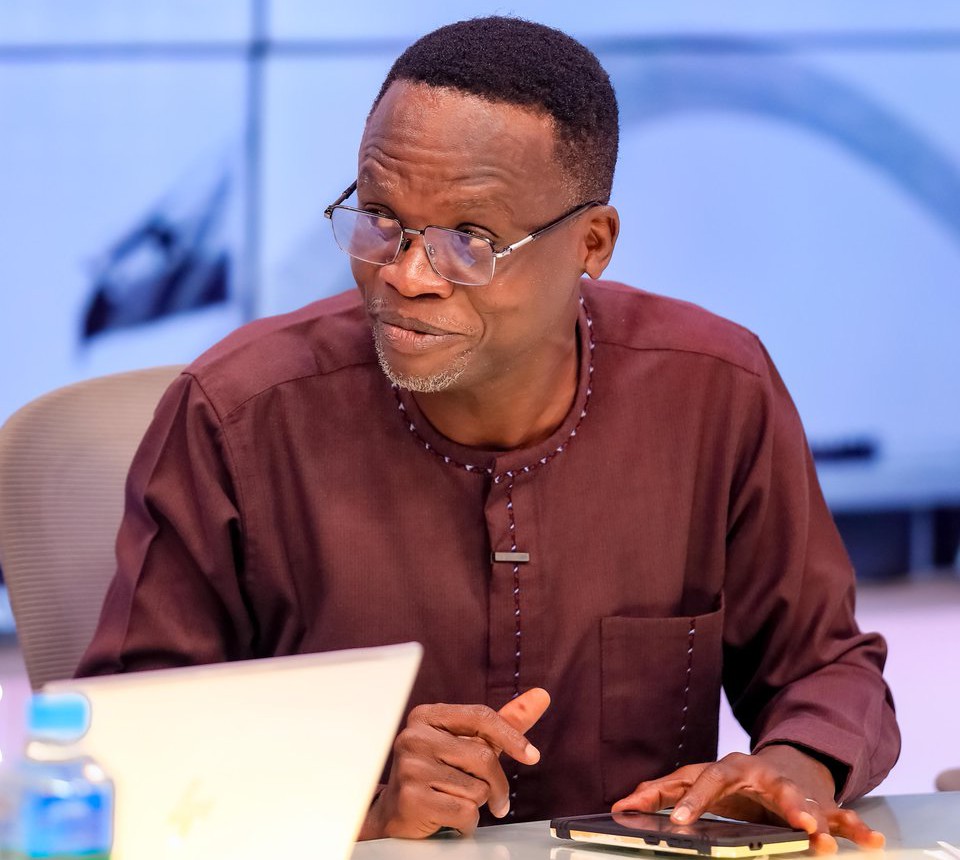
Development Economist and Research Fellow at the University of Ghana’s Centre for Social Policy Studies, Dr George Domfeh, has cautioned against downplaying the economic difficulties Ghana faced between 2020 and 2023.
According to Dr Domfeh, the period was marked by a series of severe global shocks that placed extraordinary pressure on economies, including Ghana’s.
Writing in a commentary, he argued that the current economic managers might have faced a significantly different situation had they been responsible for managing the country during the height of the COVID-19 pandemic and the subsequent global economic disruptions.
“Don’t be deceived! A lot more Ghanaians might have packed their bags and fled the country if today’s economic managers had been in charge between 2020 and 2023, when multiple global shocks battered economies worldwide,” he wrote.
Dr Domfeh further criticised what he considers an overly simplistic approach to economic management.
“Yet, apparently, some people now believe managing an economy is as easy as managing a WhatsApp group. Ɛyɛ asɛm ooo,” he added.
His comments come against the backdrop of the unprecedented economic disruption caused by the COVID-19 pandemic.
In April 2020, the International Monetary Fund (IMF) described the pandemic-induced downturn as the worst global recession since the Great Depression of the 1930s. The Fund projected a 3 percent contraction in global economic activity that year as lockdowns, supply-chain disruptions and reduced economic activity affected countries worldwide.
Ghana was also severely affected. IMF data showed economic growth falling from 6.5 percent in 2019 to 0.4 percent in 2020, while the fiscal deficit widened and public debt increased significantly.
The challenges continued beyond the pandemic. In 2022, the global economy faced another combination of shocks following Russia’s invasion of Ukraine, surging food and energy prices, persistent inflation and tighter monetary policies in major economies.
The IMF described the situation as a “crisis upon a crisis”, warning that the war and inflation were threatening the global recovery from the pandemic.
Ghana entered this period with existing fiscal and debt vulnerabilities, which were compounded by the external shocks.
By 2022, the country was dealing with high inflation, rapid exchange-rate depreciation, rising borrowing costs, capital outflows and declining investor confidence.
The IMF subsequently linked Ghana’s economic crisis to a combination of pre-existing vulnerabilities and external shocks, including the COVID-19 pandemic, the Russia-Ukraine war and tightening global financial conditions.
These pressures contributed to Ghana losing access to international capital markets and eventually seeking an IMF-supported programme as the economic crisis deepened.
Dr Domfeh’s argument is therefore that the performance of economic managers during such a period should be considered within the broader domestic and international circumstances confronting the country.
While Dr Domfeh refers to the global turmoil of 2022, the IMF’s specific description of an economic downturn as the “worst since the Great Depression” was made in 2020 in reference to the COVID-19-induced global recession.
The economic difficulties of 2022 were instead characterised by the IMF as a convergence of major shocks, particularly the Russia-Ukraine war, elevated inflation, supply disruptions and aggressive monetary tightening.
Dr Domfeh’s broader point, however, is that Ghana’s economic managers between 2020 and 2023 operated in an exceptionally challenging environment, and that economic management should not be presented as a simple or straightforward task.
His warning comes amid continuing political debate over Ghana’s economic performance and the extent to which responsibility for the country’s economic difficulties should be attributed to domestic policy decisions, global shocks or a combination of both.
By 1960news.com