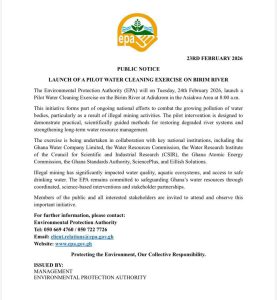
In a decisive move to reclaim one of the country’s most vital but battered water bodies, the Environmental Protection Authority (EPA) is set to launch a pioneering Pilot Water Cleaning Exercise on the Birim River.
The exercise is scheduled today, Tuesday, February 24, 2026, in Adiukrom, located within the Asiakwa area.
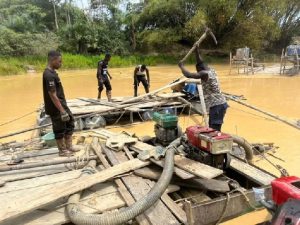
This pilot marks a critical shift from policy discussion to practical, on-the-ground restoration of river systems devastated by illegal mining (galamsey).
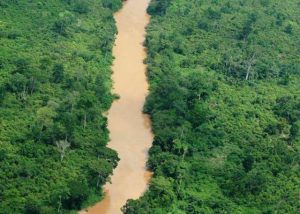
For years, the Birim River has served as a grim visual representation of the costs of illegal mining, its once-clear waters replaced by thick, metallic silt.
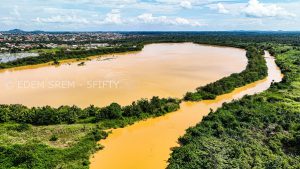 Current state of the Birim River
The EPA’s new initiative aims to prove that recovery is possible through scientifically guided methods.
The pilot is not just a cleanup; it is a demonstration of technical interventions designed to restore degraded aquatic ecosystems, improve raw water quality for downstream consumption.
Recognizing the complexity of water pollution, the EPA has assembled a “who’s who” of Ghanaian scientific and regulatory institutions.
This collaborative powerhouse seeks to ensure that the intervention is backed by rigorous testing and international standards.
Key Partners Include:
Ghana Water Company Limited & Water Resources Commission
CSIR – Water Research Institute
Ghana Atomic Energy Commission (providing isotopic and nuclear analytical techniques)
Ghana Standards Authority
Private Sector Experts: SciencePlus and Eillish Solutions.
In a statement issued by EPA Management, the authority emphasized that the destruction of water bodies impacts everyone, from local farmers to urban residents relying on the Ghana Water Company.
However, Illegal mining has significantly impacted water quality, aquatic ecosystems, and access to safe drinking water.
The EPA says it remains committed to safeguarding Ghana’s water resources through coordinated, science-based interventions.
Below is the full press release