
Akuapemanhene, Obrempongkese Oseadeayo Akwasi Akufo III, has pledged to collaborate with government and relevant stakeholders to revive economic activities at the once-thriving Mangoase Market in the Akuapem North Municipality of the Eastern Region.
According to the Akuapem overlord, the initiative forms part of broader efforts to restore the market’s relevance as a key commercial hub for agricultural trade while creating a reliable outlet for local farmers to sell their produce and reduce post-harvest losses.
The Mangoase Market, historically regarded as one of the busiest agricultural trading centers in Akuapem, particularly within the Benkum Division, played a significant role in the cocoa and food produce trade many years ago.
The market served as a vibrant commercial point during the railway era, where farmers and traders sold fresh farm produce, vegetables, and other goods directly to passengers and buyers aboard trains that passed through the area.
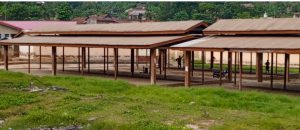
However, the market’s fortunes have declined over the years.
The once-busy market structure has now become largely abandoned and is often described by residents as a “ghost market.”
Poor road infrastructure and high transportation costs have reportedly discouraged traders from transporting goods to the market center, leading to the gradual collapse of trading activities and deterioration of the market facility.
Addressing chiefs and residents during the Odwira @200 Benkum Division Nkabom Tour at Mangoase, Obrempongkese Oseadeayo Akwasi Akufo III said his visit was intended to interact with the people and identify pressing developmental challenges confronting the community.
 Akuapemanhene, Obrempongkese Oseadeayo Akwasi Akufo III, addressing chiefs and residents of Mangoase
“I purposely came here to get to know how you are faring and to assess the development needs of the community, including schools, hospitals, roads, and other infrastructural projects that enhance development,” he stated.
The Akuapemanhene noted that he had been informed about the historical importance of the Mangoase Market and stressed the need for unity among traditional leaders and stakeholders to restore the market to its former glory.
“I have been briefed that in the olden days, Mangoase Market was one of the largest markets in Akuapem and perhaps the biggest in the Benkum Division.
Therefore, I believe it is time for me to sit with the traditional council to see how we can revive the market and economic activities in the area,” he added.
The chief’s pronouncement was met with excitement and applause from residents and traders, many of whom expressed optimism that the renewed commitment by the Akuapem overlord could help restore business activities and improve livelihoods in the community.
Meanwhile, the Twafohene of Mangoase Akuapem, Nana Otu Sakyi Amo, appealed to the Member of Parliament for Akuapem North, Sammy Awuku, and the Akuapem North Municipal Chief Executive, John Evans Kumordzi, to partner with the traditional council to help restore the economic fortunes of Mangoase.
She particularly recalled a promise by the MP to introduce the “Ofie Market” initiative in Mangoase, expressing confidence that the programme could become a major turning point for farmers and traders in the area.
 Nana Otu Sakyi Amo, Twafohene, Mangoase Akuapem
According to her, the initiative would provide a direct marketplace for farmers to sell their produce locally, reduce post-harvest losses, and create new economic opportunities for traders and residents.
Some traders who spoke to 1960news.com blamed the collapse of the market on the deplorable road network in the area.
They explained that traders from Accra and nearby communities who previously travelled to Mangoase to trade had stopped visiting because of the poor condition of the roads connecting the town to surrounding communities.
The traders appealed to government and local authorities to urgently rehabilitate the roads and support efforts to revive the market, insisting that such interventions would help them sell their produce locally instead of transporting goods over long distances to other markets.
By 1960news.com

