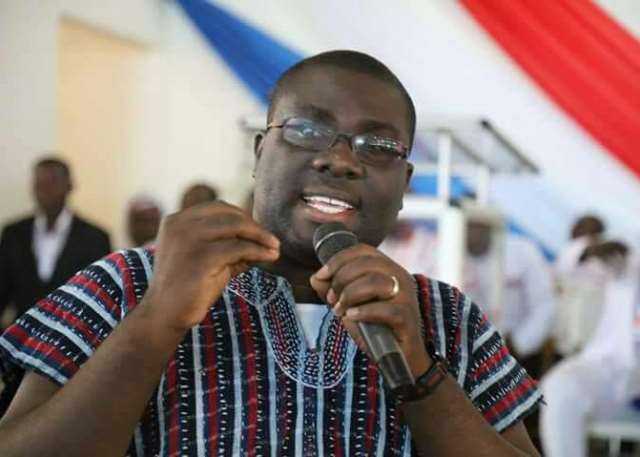
The Member of Parliament (MP) for Akuapem North in the Eastern Region, Samuel Awuku, has questioned the decision by President John Dramani Mahama to convene a high-level meeting on narcotics trafficking without the Ministers directly responsible for several of the institutions expected to participate.
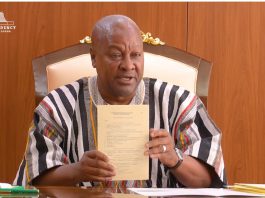
The meeting, scheduled for Thursday, September 17, 2026, at the Jubilee House in Accra, is intended to review Ghana’s border-security arrangements and strengthen efforts to prevent the trafficking of narcotic drugs and other illicit substances through the country.
However, Mr Awuku has raised concerns about the absence of key sector Ministers, arguing that their exclusion could create questions about ministerial oversight, accountability and the implementation of decisions expected to emerge from the meeting.
In a message directed at President Mahama, the Akuapem North MP questioned why the heads of the Ghana Maritime Authority, Ghana Shippers Authority and Ghana Airports Company Limited—all operating under the Ministry of Transport—would be invited to the meeting without the Minister for Transport.
He also questioned the absence of the Minister for the Interior despite the expected participation of the Ghana Police Service and the Narcotics Control Commission (NACOC), which fall under the Ministry of the Interior.
“I am wondering if these state institutions now operate without their respective Ministers,” Mr Awuku wrote.
“If not, why would the heads of the Ghana Maritime Authority, Ghana Shippers Authority and Ghana Airports Company Limited, all under the Ministry of Transport, be summoned to such a high-level meeting without the Minister for Transport?”
The MP further questioned why the Ghana Police Service and NACOC would participate without the Minister responsible for the Interior, particularly when the meeting is focused on an issue with significant national-security implications.
Mr Awuku cautioned the government against treating the narcotics-trafficking challenge as an exercise in public relations, stressing the need for a coordinated and accountable response.
“The growing concern about Ghana being used as a transit point for illicit drugs is too serious for us to treat it as an optics exercise,” he said.
He also sought clarity on who would be responsible for supervising and driving the implementation of decisions taken at the meeting.
“After this meeting, who exactly is expected to supervise and drive the implementation of the decisions reached?” he asked.
According to Mr Awuku, excluding Ministers who have direct political and administrative responsibility for the participating institutions could result in the creation of an additional layer of coordination rather than strengthening the existing institutional framework.
“Are we creating another layer of coordination when the Ministers who have direct responsibility for these institutions are not at the table?” he queried.
The MP ended his message with an appeal to President Mahama to approach the narcotics issue with the seriousness it demands.
“Mr President, respectfully, please let us take this matter seriously for a moment. Y’abrɛ ooo,” he stated.
President Mahama’s meeting follows heightened concerns over the use of Ghana as a transit point for illicit drugs and other prohibited substances.
An invitation issued by the Office of the President on Monday, September 14, indicates that the meeting will bring together the heads of institutions responsible for Ghana’s ports, airports, land borders, cargo screening, intelligence gathering and narcotics enforcement.
Those invited include the Chief of Naval Staff, Director-General of the Ghana Ports and Harbours Authority (GPHA), Commissioner of the Customs Division of the Ghana Revenue Authority (GRA), Sector Commander of the Customs Division, Tema Collection, and the Chief Executive Officer of the Ghana Shippers Authority.
The Director-General of the Ghana Maritime Authority, Managing Director of Ghana Airports Company Limited, Chief Executive Officer of Ghana Link Network Services Limited and Chief Executive Officer of Meridian Port Services Limited are also expected to participate.
The security and intelligence sector will be represented by the Director-General of the National Intelligence Bureau (NIB), Director-General of NACOC and the Criminal Investigations Department (CID)/INTERPOL of the Ghana Police Service.
The Ministers for Finance and Foreign Affairs have also been invited, with the Presidency stressing the importance of the Finance Minister’s personal attendance because of the national-security implications of the discussions.
The meeting is expected to assess vulnerabilities within Ghana’s border-control system and examine intelligence-sharing mechanisms, cargo and passenger-screening procedures, surveillance capabilities, inter-agency coordination and the deployment of technology to detect illicit substances.
Participants have reportedly been directed to prepare assessments of security gaps within their respective areas of responsibility and propose practical measures to improve intelligence sharing, surveillance, screening and joint enforcement operations.
The Presidency has described the meeting as urgent and has directed participating institutions to be represented by their respective heads, accompanied by no more than one relevant technical officer.
While the meeting is expected to strengthen coordination among agencies responsible for Ghana’s border and national-security architecture, Mr Awuku’s intervention has brought renewed attention to the question of ministerial oversight and accountability, particularly regarding who will take responsibility for implementing and supervising decisions reached at the meeting.
By 1960news.com