Minority Leader in Parliament, Osahen Alexander Kwamena Afenyo-Markin, has accused President John Dramani Mahama and his government of becoming increasingly intolerant of criticism, warning that the use of state power against critics could undermine Ghana’s democratic freedoms.
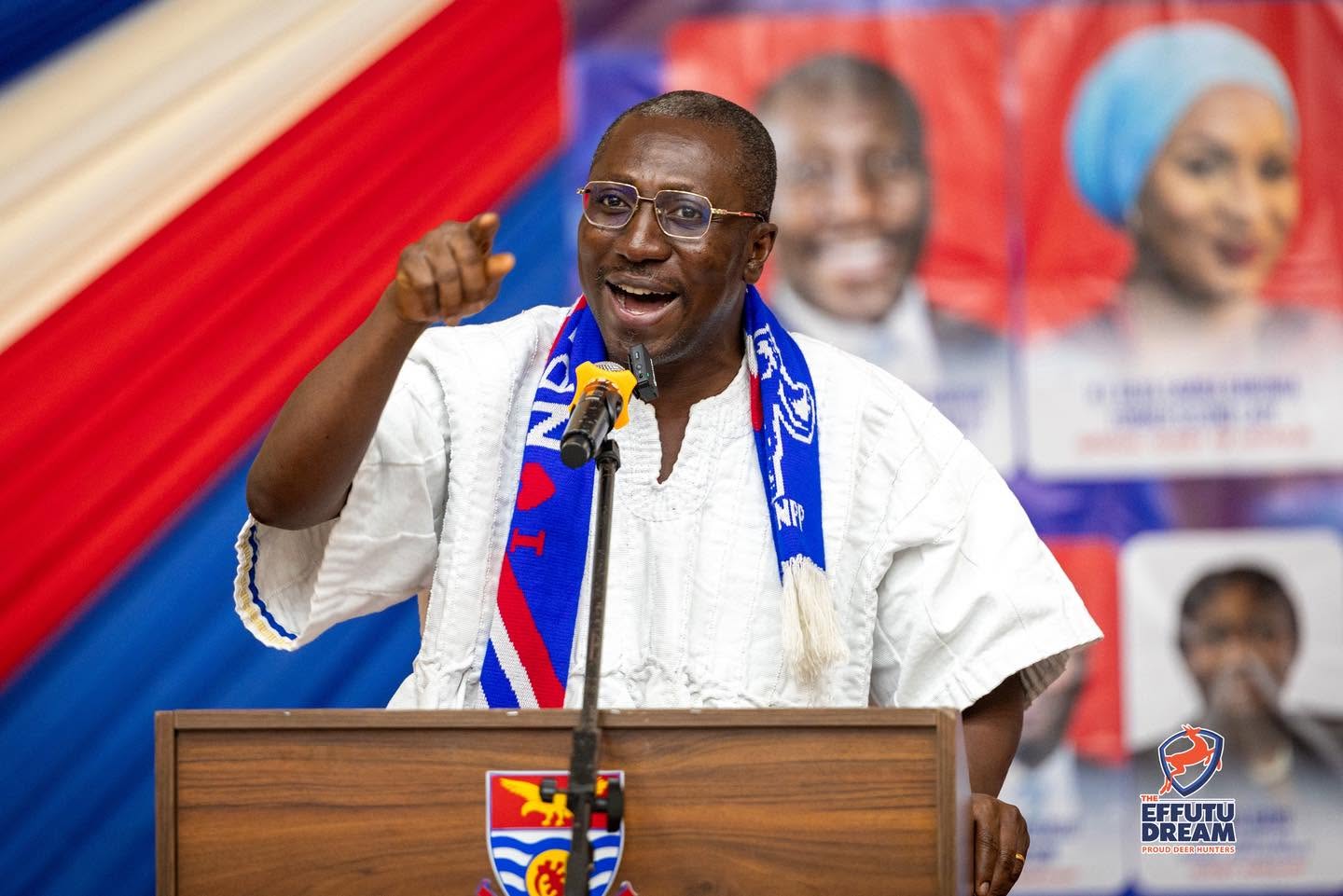
Speaking at the New Patriotic Party’s (NPP) National Delegates Conference in Kumasi on Saturday, October 3, 2026, Mr Afenyo-Markin said the President appeared to have lost the resilience he once claimed to possess in the face of criticism.
“President John Mahama, we knew, has become very sensitive to criticism these days. It is as if his crocodile skin has peeled off,” he said.
His comments came days after President Mahama said he had developed a “crocodile skin” and do not mind being insulted, while discussing the limits of free expression and arrests over social media content.
Mr Afenyo-Markin alleged that critics of the National Democratic Congress (NDC) administration are being arrested and detained for expressing views that are uncomfortable to the government.
He argued that the same level of political tolerance should apply under the current administration as was expected of the NPP government when it was in office.
“Under President Akufo-Addo, we heard worse things from NDC activists against our leaders. But we endured and stayed focused on dealing with the problems confronting the people of Ghana,” he said.
According to him, Ghana’s democracy could only be strengthened if governments are prepared to tolerate criticism irrespective of which political party was in power.
“The same standard of tolerance that we allowed to strengthen our democracy when we had power must govern the exercise of state power under President Mahama and the NDC,” he stated.
The Minority Leader cited the cases of several individuals who, according to him, had been arrested or detained over their comments, arguing that such actions raised concerns about freedom of expression and the treatment of political opponents.
Mr Afenyo-Markin also referred to the recent legal troubles involving Manhyia South MP Nana Agyei Baffour Awuah, describing the circumstances surrounding the legislator’s attempted arrest at the Accra High Court as a matter of concern.
Nana Baffour Awuah later voluntarily surrendered to the Economic and Organised Crime Office (EOCO) on October 1, following the issuance of an arrest warrant. He was subsequently arraigned before an Accra High Court on October 3 and pleaded not guilty to charges including conspiracy to commit a crime, causing financial loss to the state and money laundering. The court granted him GH¢10 million bail with two sureties.
Mr Afenyo-Markin said the Minority would continue to defend what it considers to be the constitutional rights of opposition politicians and other citizens.
“We assure you all that we will defend our freedoms, insist on equal justice and pursue accountability through lawful democratic means,” he said.
“We, the mighty Minority, shall never be intimidated by the intimidated in Parliament.”
The Minority Leader also turned his attention to the Judiciary, expressing concern over reported comments by Chief Justice Paul Baffoe-Bonnie during visits to state institutions.
He said the comments had generated concerns about the appearance of political alignment and argued that judicial leaders needed to be particularly careful in their public pronouncements.
The Judicial Service had previously explained that the Chief Justice’s remarks were made in good faith and were not intended to undermine judicial independence. The Ghana Bar Association, however, subsequently criticised that explanation, with its president describing the Chief Justice’s comments and comparison with the previous administration as problematic.
Mr Afenyo-Markin rejected the explanation offered by the Judicial Service.
“Public confidence requires judicial leaders to exercise particular care when discussing political agenda of any government. Presidents come and go. Parties win and lose,” he said.
“But the bench must remain the bench. Its loyalty must be to the Constitution. Its purpose must be justice. Its independence protects all of us.”
He warned that the rule of law could lose public confidence if state institutions are perceived as being used selectively against political opponents.
“When the law becomes a whip for brutalising and terrorising the opposition and a shield for friends and cronies of the NDC government, then it is not a law anymore. It is a tool for instilling fear,” he stated.
According to Mr Afenyo-Markin, attempts to silence political critics could have consequences beyond the immediate targets, potentially affecting journalists, lawyers, traders, students and other citizens who express opinions on public affairs.
“Fear never stops at its first victim. It comes for the journalist, the lawyer, the trader, the student with a mobile phone, internet bundle and an opinion,” he said.
He accused the government of seeking to wear down its critics and fracture the opposition’s ranks.
“They want us tired. They want us afraid. They want the critics of their hopelessness quiet and our ranks broken,” he added.
Mr Afenyo-Markin also used his address to criticise the government’s economic policies and implementation of its campaign promises.
He claimed that several flagship initiatives had not delivered the results promised to Ghanaians, citing the government’s 24-hour economy policy as one example.
“Meanwhile, they can’t even implement their initiatives in their manifesto. No 24-hour economy, no one job three shifts, high electricity tariffs. They sell gold, they make losses,” he said.
He further criticised the government’s handling of the agricultural sector, particularly cocoa, rice and maize production.
According to him, cocoa farmers are receiving lower payments than they did under the previous NPP administration, which he described as unprecedented in the Fourth Republic.
“Cocoa farmers are today being rewarded with less money than they received under Akufo-Addo. This has never happened in the history of the Fourth Republic. A new government paying farmers less than the previous one,” he said.
He extended the criticism to rice and maize farmers, while also questioning the government’s presentation of economic performance.
“Even the economic data looks good on paper,” Mr Afenyo-Markin said, without elaborating further during the portion of the speech provided.
Mr Afenyo-Markin assured NPP delegates that the parliamentary Minority would continue to challenge the government and defend what it considers to be the interests of Ghanaians.
“We will fight for you today, tomorrow, until we get victory in 2028,” he told the delegates.
He also called for what he described as “one law for all”, stressing that equal treatment under the law should apply irrespective of political affiliation.
His remarks formed part of a broader appeal to NPP delegates at the party’s National Delegates Conference, where the party is seeking to reorganise its structures and strengthen its political base ahead of the 2028 general elections.
By 1960news.com