
The gray concrete pillars of the Asokwa Interchange have been reborn.
This week, the roar of Kumasi traffic is being met with a vibrant explosion of color as students from across the Ashanti Region descend upon the landmark for Ashanti Fest ’26.
In a massive live-art installation, the region’s youngest creative minds are transforming public infrastructure into a sprawling testament to Ghanaian culture, history, and future aspirations.
The atmosphere at the interchange is electric.
Armed with spray cans, acrylics, and brushes, students from various Senior High Schools (SHS) are working side-by-side.
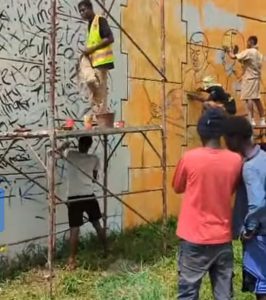
What was once a standard transit point has become a destination for commuters and tourists alike, who are slowing down, not for traffic, but for the art.
Key highlights of the showcase include intricate murals of Adinkra symbols, portraits of Asante royalty, and bold, contemporary depictions of daily Kumasi life and the “Green Ghana” initiative.
Students from rival schools are seen swapping tips and paint colors, proving that creativity knows no boundaries.
For many of these students, Ashanti Fest ’26 represents the first time their work has been seen outside the school walls.
“It’s one thing to draw in a sketchbook, but to put your vision on a pillar that thousands of people pass every day? That’s a different kind of pride,” says one participating student from Kumasi Academy.
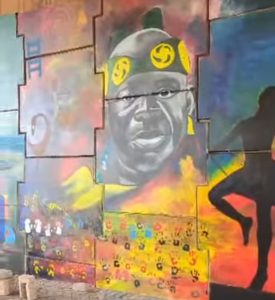
Organizers of the festival noted that the goal of the Asokwa Mural Project is twofold: to beautify the city’s urban landscape and to provide a high-visibility platform for vocational and visual arts students to kickstart their professional portfolios.
As Ashanti Fest ’26 continues to celebrate the rich traditions of the region, this specific activation highlights the evolution of the Ashanti spirit.
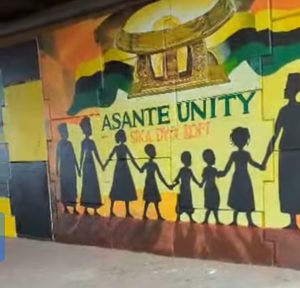
By handing the “keys to the city” to the youth, Kumasi is ensuring that its history is not just preserved in museums, but lived and painted on the very streets its citizens walk.
By 1960news.com

