
The Managing Director of Zoomlion Ghana Limited, Mrs. Doris Kwekwor Adjei, has called on the government to reinstate the SaniGuard or Town Council system, describing it as a critical missing link in Ghana’s efforts to tackle poor sanitation and promote cleaner communities.
According to her, reviving the once-effective sanitation enforcement mechanism would encourage citizens to take ownership of their surroundings while improving compliance with environmental health regulations.
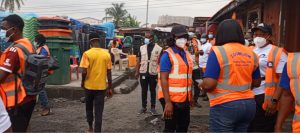
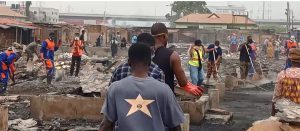
Mrs. Adjei made the call while speaking to journalists during the National General Clean-up Exercise after touring several communities in Accra, including Alajo, Accra New Town, Circle, and Odawna, where Zoomlion workers had been deployed to support the government’s nationwide clean-up campaign following the devastating floods that recently affected parts of the country.
During her inspection, she monitored the deployment of heavy equipment, security service and sanitation personnel engaged in clearing refuse, desilting drains, and removing debris to reduce the risk of future flooding.
Expressing her support for the return of the SaniGuard initiative, Mrs. Adjei said the programme had previously played a significant role in promoting sanitation discipline within communities.
“Yes, I fully support that. The SaniGuard projects, which we have done in the past, were a very good thing, and I would fully support that the government should bring that on board. It will fully help us so that people will own their space and own their sanitation space.”
She stressed that one of Ghana’s greatest sanitation challenges is the lack of personal responsibility among citizens regarding the cleanliness of their homes and surroundings.
According to her, restoring the SaniGuard system would help change attitudes and social norms that have contributed to indiscriminate littering, illegal dumping of refuse, and poor household sanitation practices.
Mrs. Adjei expressed confidence that the country’s sanitation problems could be overcome through collective action.
“I always believe that Ghana’s challenges can be resolved by Ghanaians, and together we’ll be able to cut the waste.”

She noted that Zoomlion has committed significant resources to support the government’s sanitation agenda by deploying heavy-duty equipment, including backhoes, tipper trucks, and compactor trucks, to communities affected by the floods.
However, she cautioned that the current nationwide clean-up exercise should not be viewed as a one-off intervention.
“This cannot be a nine-day wonder. Sanitation is a continuous thing.”
The Zoomlion Managing Director further emphasized that improving waste segregation remains one of the country’s biggest challenges, attributing it largely to public attitudes and inadequate education.
She said citizens need continuous sensitisation on proper waste management practices, including separating plastic bottles, organic waste, and other recyclable materials before disposal.
“It still boils down to attitude. It still comes down to attitude and sensitisation of the citizens to understand where to put bottles, where to put organic waste, and where to put all other recoverables.”
Mrs. Adjei underscored that Zoomlion alone cannot solve Ghana’s sanitation problems, calling for greater public participation and behavioural change.
“Zoomlion cannot do it alone. We are Ghanaians, and so attitude plays a key role. Sensitisation is very important at this point.”
The SaniGuard and Town Council system previously served as a vital grassroots enforcement mechanism for environmental sanitation across Ghana.
The officers acted as the bridge between national sanitation policies and community-level compliance by ensuring households, businesses, and public institutions adhered to environmental health by-laws.
Their responsibilities included inspecting residential properties, markets, and public spaces to maintain acceptable sanitation standards, while educating residents on proper refuse storage, waste segregation, personal hygiene, and public health.
In addition to public education, SaniGuard officers were empowered to issue warnings, impose fines, and initiate legal action against individuals and institutions that violated sanitation regulations, making them an important deterrent against indiscriminate waste disposal and other environmental offences.
Mrs. Adjei believes the reintroduction of the SaniGuard system, combined with sustained public education and active citizen participation, would significantly strengthen Ghana’s efforts to maintain cleaner communities, improve public health, and prevent future environmental disasters.
By 1960news.com

